Drew Weber · 13 October 2026
Volunteers Transform Historical Collections into Searchable Online Resources for Public Use
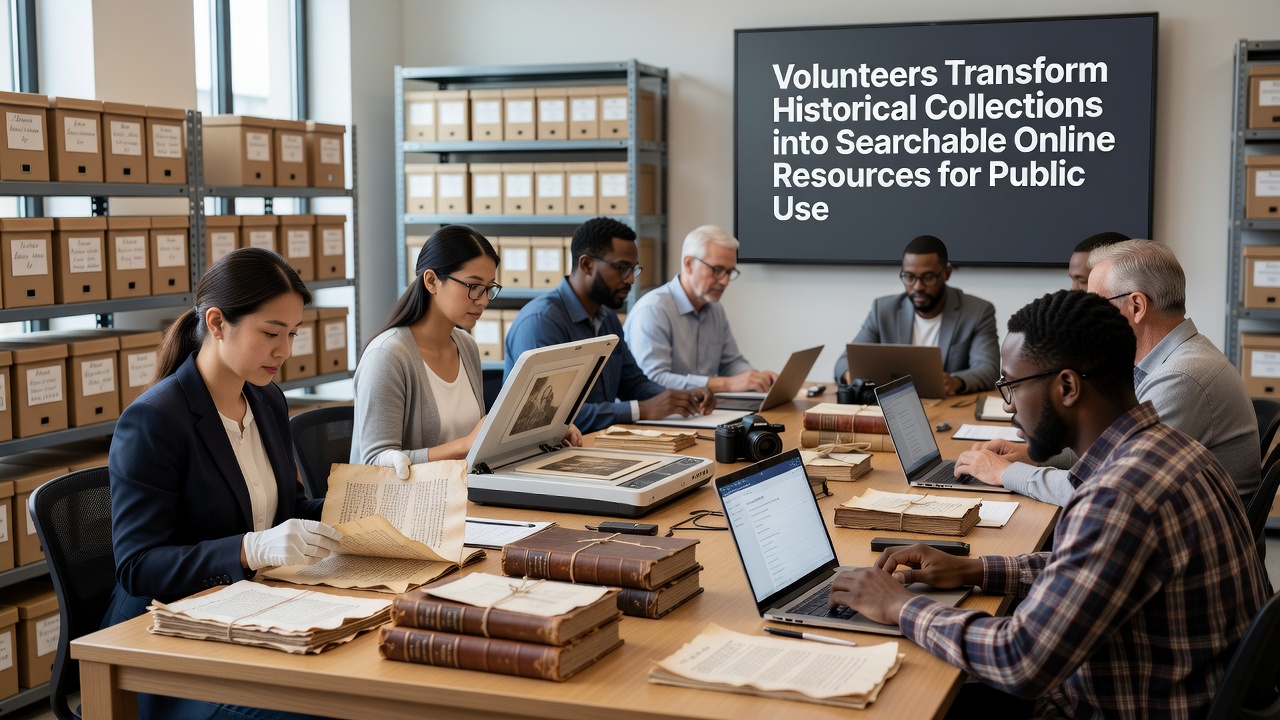
Community driven efforts across multiple regions have accelerated the digitization of historical records, turning physical archives into accessible online databases that researchers, students, and the general public can explore without visiting physical locations, and these initiatives rely heavily on trained volunteers who handle scanning, metadata entry, and quality control tasks that expand the reach of collections once limited to local access only.
Project Scale and Volunteer Contributions
Teams in various states and countries coordinate with libraries, museums, and government repositories to process millions of pages annually, while volunteers often dedicate several hours each week to transcribe handwritten ledgers, tag photographs with geographic details, and verify dates against cross referenced sources, and this work has produced searchable portals that include census data, military service records, and community newspapers dating back to the nineteenth century.
Data from ongoing programs shows that volunteer hours contributed in 2025 exceeded previous annual totals by substantial margins, and similar momentum continued into October 2026 when several regional projects completed large batches of nineteenth century maps and correspondence that now appear in public search interfaces with full text capabilities.
Technical Processes Behind the Transformation
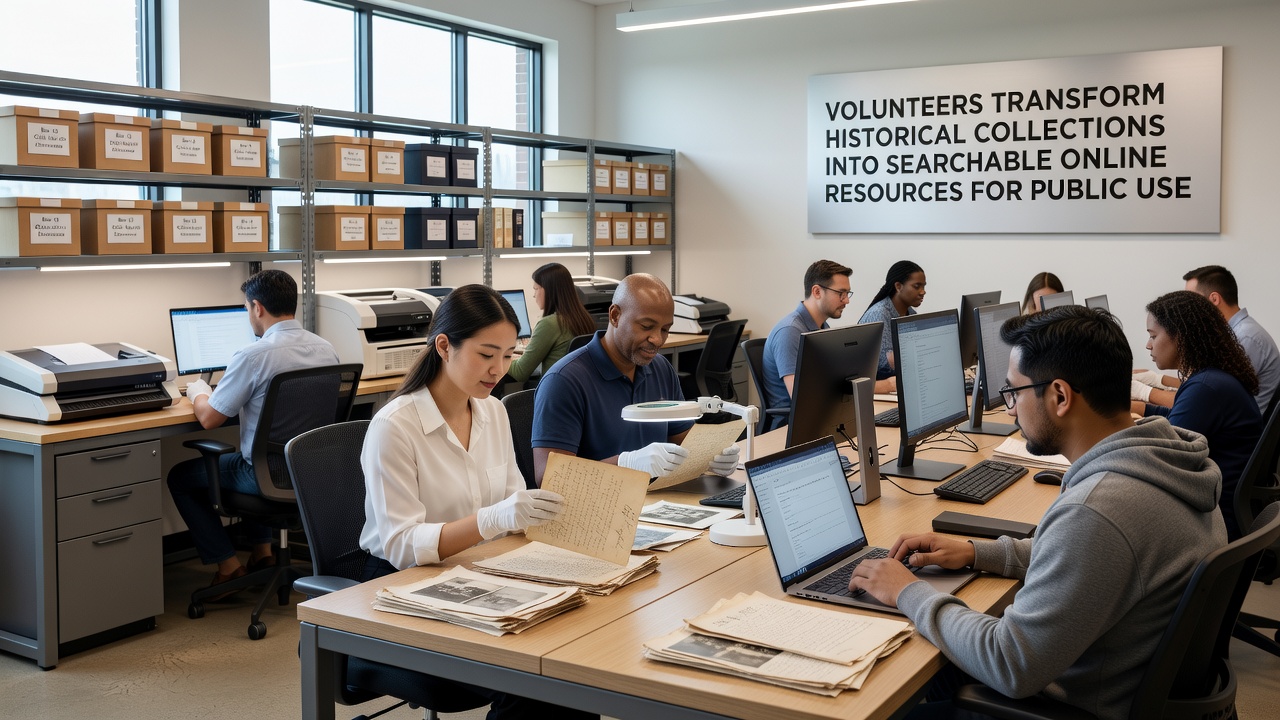
Standard workflows begin with high resolution scanning equipment that captures fragile materials without damage, after which volunteers apply standardized metadata fields that include creator names, creation dates, and subject keywords so search engines can surface relevant items quickly, and optical character recognition software assists with printed text while human reviewers correct errors that automated tools miss in older fonts or faded ink.
One case involved a county historical society where volunteers processed over 12,000 glass plate negatives, and the resulting digital files now integrate with national platforms that allow users to zoom into details and download high resolution copies for educational or personal research purposes.
Geographic Reach and Partnerships
Collaborations extend beyond single communities as state archives partner with academic institutions to share digitization platforms, and international examples include efforts coordinated through the National Archives of Australia that connect local volunteer groups with broader networks for standardized cataloging practices, while European projects have drawn on similar volunteer models to make wartime correspondence available through centralized portals maintained by national libraries.
Observers note that these partnerships reduce duplication of effort and allow smaller organizations to benefit from shared technology infrastructure without bearing full development costs, and figures from library associations indicate that volunteer supported projects have increased online access to unique regional materials by measurable percentages in recent years.
Public Access and Research Outcomes
Once materials move online, usage statistics reveal frequent queries from genealogists tracing family migrations, educators preparing classroom materials, and local historians examining economic patterns through business ledgers, and search functions often support Boolean operators along with geographic filters that narrow results to specific towns or time periods.
According to reports published by the U.S. National Archives, volunteer transcribed records have supported peer reviewed studies on population movement and agricultural changes, and comparable outcomes appear in Canadian provincial archives where digitized treaty documents now inform ongoing legal and academic discussions.
Training and Quality Assurance Measures
Organizations provide structured training sessions that cover handling protocols for delicate items, consistent application of metadata schemas, and basic troubleshooting for scanning software, while periodic audits by professional archivists ensure accuracy before records publish to public sites, and this layered review process maintains reliability even as volunteer numbers grow.
Those who participate frequently report improved technical skills and deeper familiarity with local history, and program coordinators track retention rates that reflect sustained engagement across multiple project cycles.
Future Developments and Ongoing Needs
Expansion plans target additional record types such as oral history recordings and three dimensional artifacts that require specialized imaging techniques, and funding from grants plus private donations supports equipment upgrades that keep pace with evolving preservation standards, while volunteer recruitment remains central to sustaining output levels.
Research indicates that continued growth depends on accessible training resources and clear communication about project goals, and several networks have begun sharing best practices through webinars and regional workshops to help new groups launch similar efforts efficiently.
Conclusion
Volunteer contributions have shifted historical collections from restricted physical access to broadly available digital resources that support diverse research and educational activities, and ongoing coordination among archives, libraries, and community participants continues to expand the volume of material processed each year while maintaining quality standards that researchers rely upon for accurate information.