Freya Butler · 15 September 2026
Peak Ridge Agricultural Groups Launch Trials of Advanced Water Management Systems
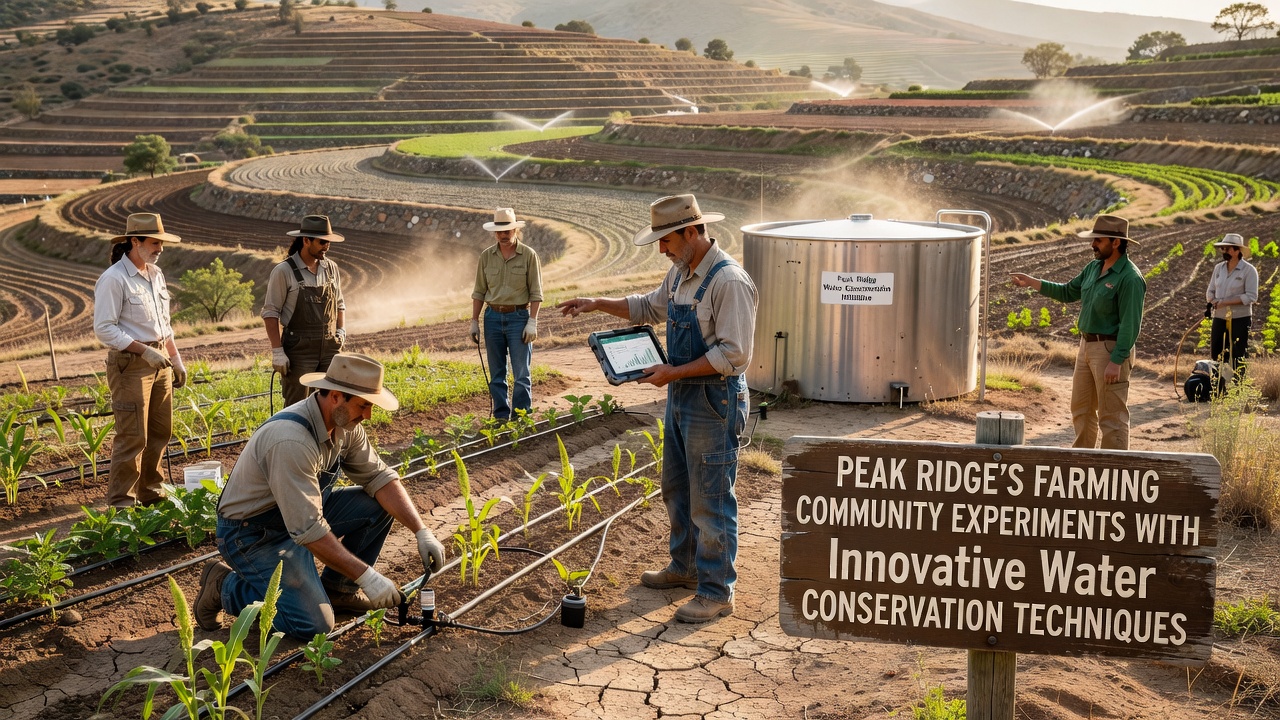
Peak Ridge farming operations have begun coordinated experiments with several water conservation methods that combine precision technology and traditional practices, and community records show these efforts started gaining momentum in early 2025. Local growers have installed soil moisture sensors across multiple fields while testing subsurface drip systems that deliver water directly to root zones, and data collected through the first growing season indicated measurable reductions in overall usage compared to previous years.
Background on Local Agricultural Water Use
Peak Ridge sits in a region where annual rainfall averages vary widely from one season to the next, which has prompted agricultural organizations to track precipitation patterns closely through cooperative monitoring stations. Farmers in the area cultivate a mix of row crops and orchards that together require consistent moisture levels during critical growth periods, and historical figures reveal that irrigation accounts for the majority of water withdrawals during dry months. Community leaders formed a working group in 2024 to compile baseline usage statistics, and that effort produced detailed maps highlighting fields with the highest consumption rates.
Techniques Under Active Testing
One method involves variable-rate irrigation controllers linked to weather stations that adjust output based on real-time evapotranspiration data, and several operators reported that these units reduced applied water by 15 to 20 percent during the 2025 trial period. Another approach uses cover crop rotations to improve soil structure and increase water-holding capacity, while researchers from nearby extension services have documented higher infiltration rates on plots where this practice was maintained for two consecutive seasons. Peak Ridge participants also experimented with fog-harvesting nets placed along field borders during cooler months, and preliminary measurements showed modest supplemental collection that supplemented main irrigation schedules.
Community Coordination and Data Sharing
Meetings held at the regional agricultural hall have allowed growers to compare results across different soil types and crop varieties, and shared spreadsheets have helped identify which sensor placements produced the most reliable readings. In September 2026 the group plans to host a field day that will demonstrate live sensor networks and drip line configurations to neighboring districts, and organizers expect participation from at least eight additional farms. Equipment suppliers have provided training sessions on calibration procedures, and attendance logs indicate steady interest from both established operators and newer entrants to the area.
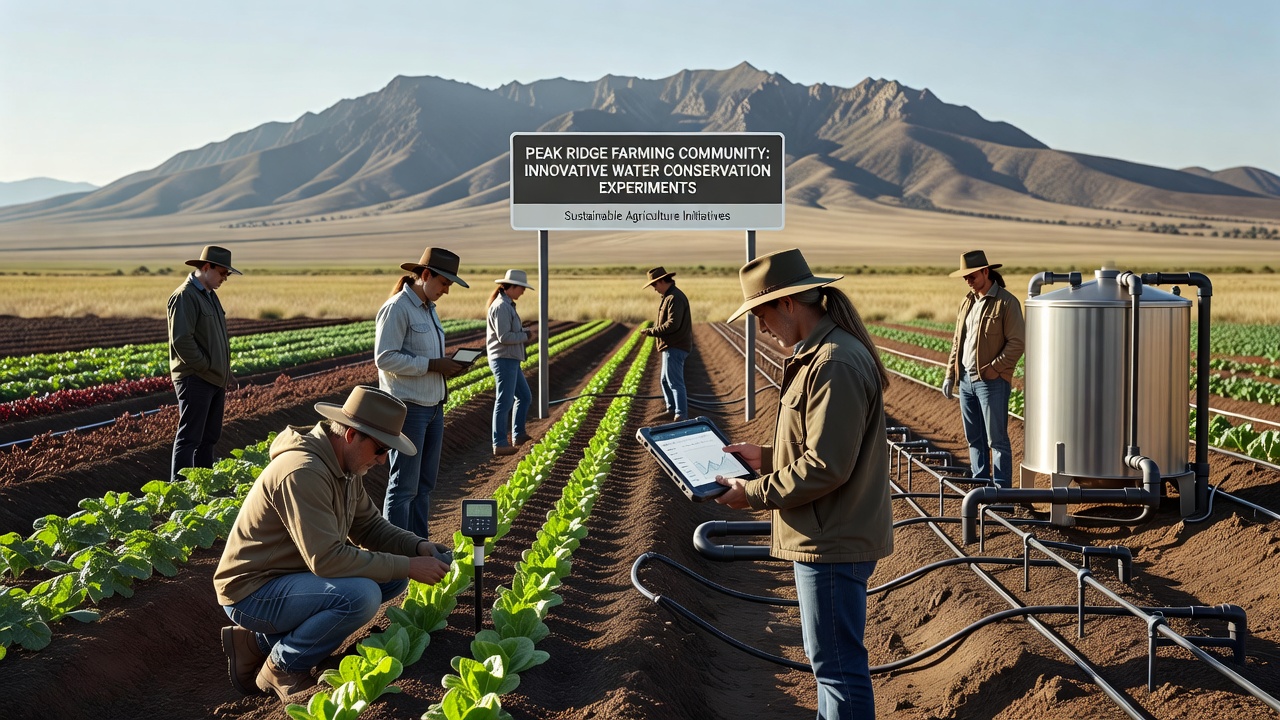
Additional trials focus on mulching materials derived from local crop residues that reduce surface evaporation, and test plots have shown surface temperature differences of several degrees compared to bare soil controls. Observers note that integration of these materials with existing tillage schedules requires careful timing to avoid interference with planting windows, and follow-up assessments continue through the current cycle.
Measured Outcomes and Supporting Records
Figures compiled by the cooperative monitoring network indicate an average 18 percent drop in irrigation withdrawals across participating acreage during the 2025 season, while yields remained within normal ranges for the dominant crops. External verification from university-affiliated labs has cross-checked soil samples for nutrient retention, and results aligned with the on-farm observations. One farm reported reusing tailwater through a series of settling basins that captured runoff for secondary application, and that operation recorded the largest single-site reduction among the initial group.
According to Australian Department of Agriculture reports on similar systems, comparable drip and sensor combinations have produced consistent savings in semi-arid zones when paired with regular maintenance. Peak Ridge data collectors have adopted similar record-keeping templates to allow future comparisons with those international benchmarks.
Challenges Encountered During Implementation
Initial installation costs for sensor arrays and control valves required some operators to seek cost-share programs through regional conservation districts, and approval timelines extended several weeks beyond original projections. Equipment compatibility issues arose when mixing components from multiple manufacturers, yet troubleshooting sessions resolved most conflicts within the first month of operation. Weather anomalies during late summer 2025 tested the limits of the new controllers, and operators adjusted threshold settings to prevent over-correction during unexpected rainfall events.
Next Steps and Ongoing Monitoring
Expansion of the sensor network to additional fields is scheduled for spring 2027, and funding applications have already been submitted to support equipment purchases. Continued collection of evapotranspiration and yield data will allow statistical analysis of long-term trends, and results will be presented at the September 2026 field day for broader feedback. Collaboration with extension specialists continues to refine best practices for local soil conditions, and participants have begun documenting maintenance protocols that can be shared with new entrants.
Conclusion
Peak Ridge farming records now contain detailed logs of water application rates, sensor outputs, and crop responses that span multiple seasons, and these datasets form the foundation for evaluating which combinations of techniques deliver the most reliable conservation outcomes. Continued participation from the agricultural community supports ongoing refinement of the methods under test, while external linkages to national and international resources provide context for interpreting local results. The structured approach taken by the working group has produced verifiable measurements that can inform similar efforts in comparable growing regions.