Jordan Sullivan · 29 September 2026
Local Agricultural Trials Unlock New Drought Mitigation Approaches
Communities across several drought-prone areas have turned to on-farm experiments as a way to develop practical responses to water shortages, and these efforts have produced measurable results by September 2026. Researchers from multiple institutions have documented how small-scale trials in irrigation timing, soil amendments, and crop selection have translated into broader strategies that reduce water use while maintaining yields. Data from participating farms show average reductions in irrigation needs ranging from 15 to 30 percent, according to figures compiled by the United States Department of Agriculture.
Core Methods Tested in Field Conditions
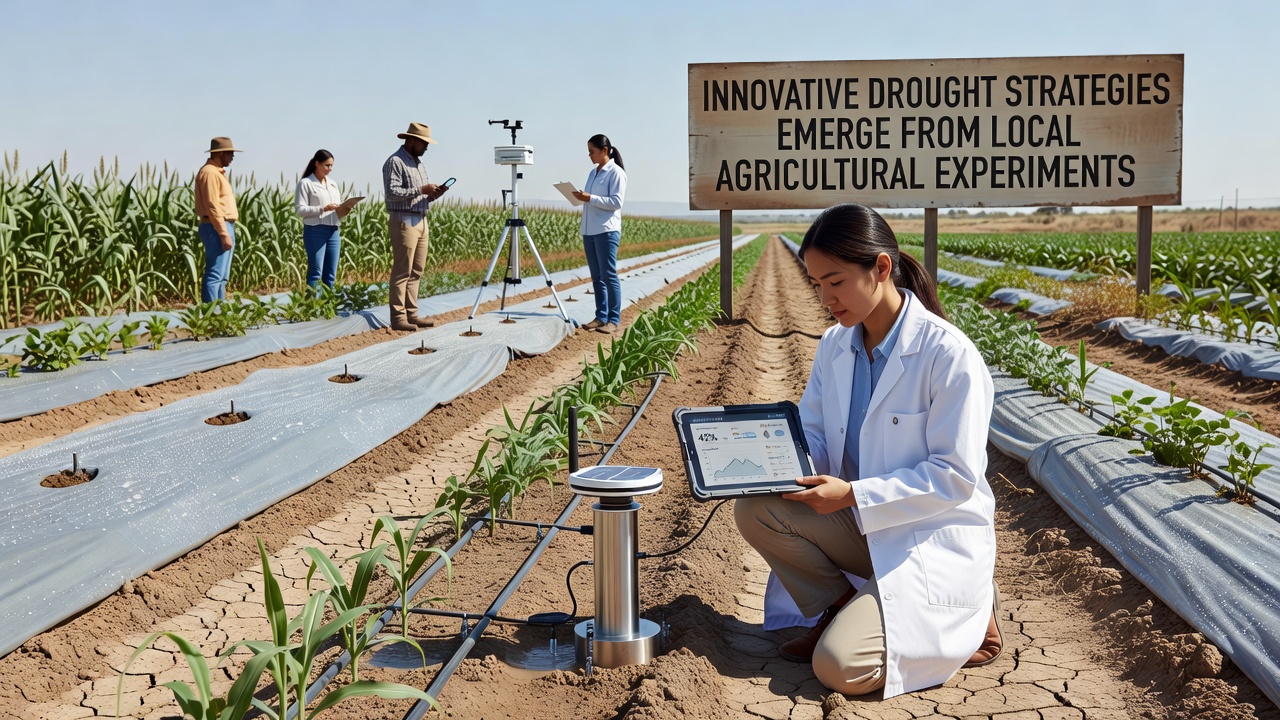
Farmers working with university extension services and local cooperatives have focused on three main areas during these trials. Precision scheduling tools that combine soil moisture sensors with weather forecasts allow operators to apply water only when crops reach specific stress thresholds. Cover cropping sequences and organic matter additions improve soil structure so that fields retain moisture longer between rain events. Varietal selection programs have introduced drought-tolerant hybrids and traditional landraces that require less supplemental irrigation during critical growth stages. Each approach underwent side-by-side comparisons on the same parcels, which helped isolate the effects of individual changes from seasonal weather variation.
One study coordinated across three states tracked 48 commercial operations for two full growing seasons. Participants recorded daily water applications and final harvest weights, then shared anonymized data sets with agronomists who performed statistical analysis. The combined results indicated that farms using sensor-driven scheduling cut total water deliveries by nearly one-quarter without statistically significant yield penalties in corn and alfalfa rotations.
Regional Adaptations and Data Patterns
Similar experiments in Australia’s Murray-Darling Basin have tested subsurface drip systems paired with deficit irrigation protocols. Government reports from the Australian Department of Agriculture, Fisheries and Forestry note that participating growers achieved comparable water savings while preserving fruit quality in almond orchards. In both the American and Australian cases, the key variable proved to be consistent monitoring rather than any single technology; farms that maintained detailed logs adjusted practices more effectively than those relying on calendar-based watering.
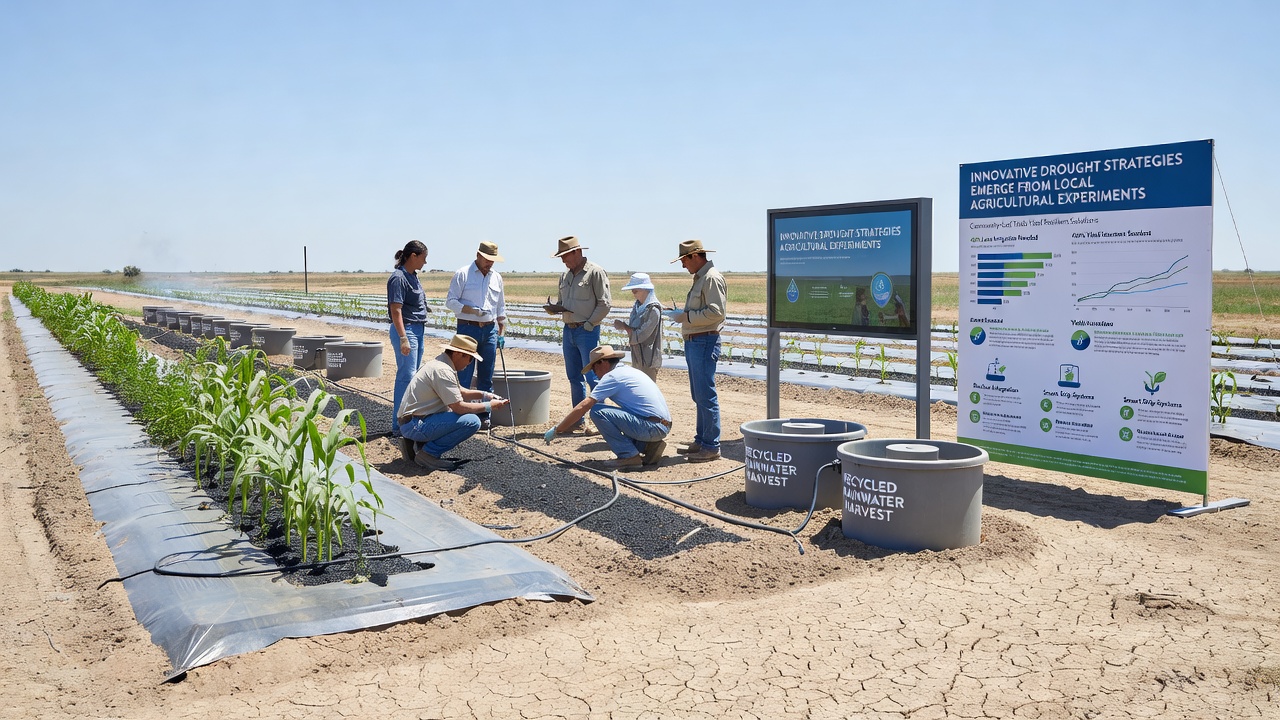
European researchers have examined complementary techniques in Mediterranean vineyards. Trials coordinated by the French National Institute for Agriculture, Food and Environment evaluated partial root-zone drying combined with reflective mulch applications. Yield data collected through 2026 demonstrated stable grape production alongside a 22 percent drop in seasonal water withdrawals. Observers note that these outcomes mirror patterns seen in North American grain systems, suggesting the underlying principles transfer across climates and crop types when local calibration occurs.
Scaling Results Beyond Individual Farms
Extension agents have begun packaging successful protocols into decision-support tools that other producers can adapt. Workshops held in county offices present the raw trial data alongside simplified decision trees so participants can match techniques to their own soil types and equipment. Several cooperatives now maintain shared sensor networks that feed anonymized readings into regional models, allowing forecasts to incorporate real-time field conditions rather than relying solely on distant weather stations.
Cost-benefit records kept by participating growers show that initial equipment purchases typically reach payback within two to three seasons when water costs or pumping energy expenses are high. Maintenance requirements remain modest once operators integrate sensor checks into existing scouting routines. These practical considerations have encouraged wider adoption even among operations that did not participate in the original experiments.
Conclusion
The pattern emerging from these distributed trials points to iterative, locally calibrated adjustments rather than universal prescriptions. Continued data collection through the end of 2026 and into subsequent seasons will clarify which combinations hold up under more extreme drought sequences. Agricultural agencies and research networks continue to aggregate findings so that new entrants can build on documented results instead of repeating earlier tests.